Table Of Content

Other joint committees serve to make advisory reports; for example, there exists a Joint Committee on Taxation. Hence, the power of joint committees is considerably lower than those of standing committees. In the instance when the presidency and both Houses of Congress are controlled by one party, the speaker normally takes a low profile and defers to the president.
Personnel, mail and office expenses
The Speaker, who is chosen among the membership of the political party with the most seats in the House, establishes the legislative priorities for the body and presides over the deliberation of bills under consideration. The two-term limit tradition was maintained unofficially for 132 years. Franklin Roosevelt was re-elected in 1944 for a fourth term amidst the United States' engagement in World War II but died shortly afterwards in office. Constitution was ratified in 1951, formally establishing in law the two-term limit—although it did not apply to the incumbent Harry S. Truman, Franklin Roosevelt's successor. In 15 state legislatures, state legislators are subject to term limits. Voters in six additional states voted to have term limits, only to have those votes nullified.
Supreme Court
Near-record number of House members not seeking re-election in 2018 - Pew Research Center
Near-record number of House members not seeking re-election in 2018.
Posted: Wed, 11 Apr 2018 07:00:00 GMT [source]
A member of the House is referred to as a representative, congressman, or congresswoman. The House also has the power to formally censure or reprimand its members; censure or reprimand of a member requires only a simple majority, and does not remove that member from office. In most cases, the relocation assistance will be three times the fair market rent of the unit (based on the HUD figures) plus $1,411 in moving costs.
Health benefits
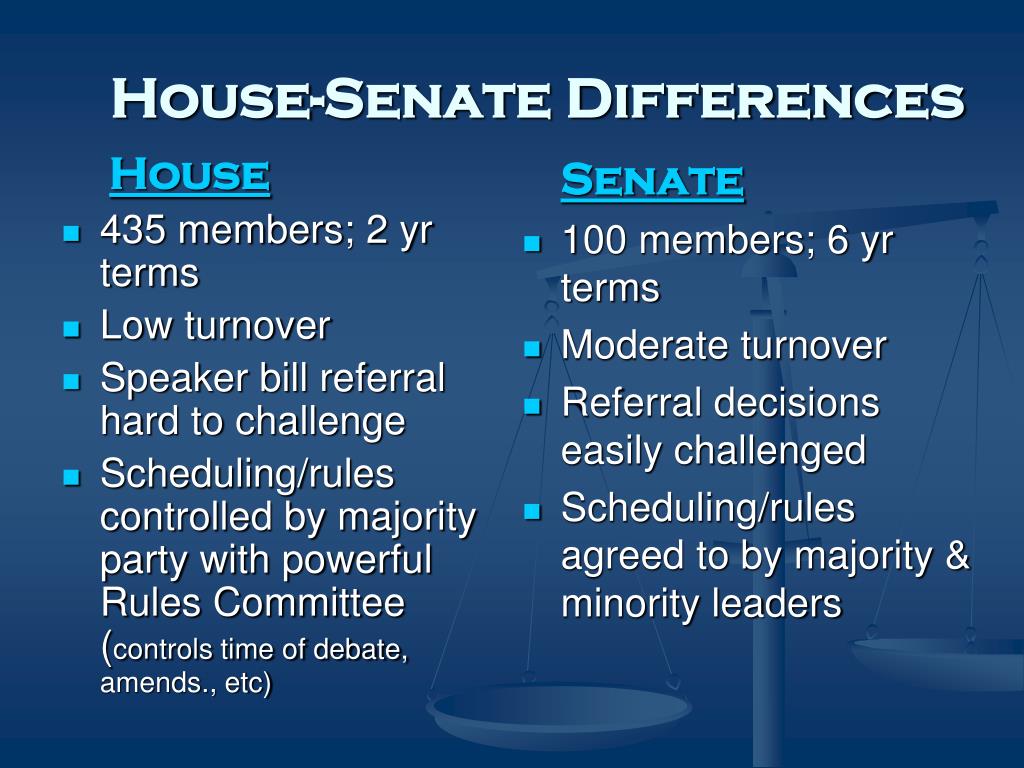
Committees also have oversight responsibilities to monitor agencies, programs, and activities within their jurisdictions, and in some cases in areas that cut across committee jurisdictions. Learn more about the history of the majority and minority leaders from the Office of the Clerk. After extensive debate, the framers of the Constitution agreed to create the House with representation based on population and the Senate with equal representation. This agreement was part of what is referred to as The Great Compromise. The two houses of Congress may effectively have the same legislative powers, but they operate differently.
Several elements of the package — such as “just cause” eviction protections and a timeline for paying back rent — have already gone into effect, while two other provisions are expected to go into effect in mid-March. The legislation has been referred to the House Fiscal Review committee. It must pass this committee, receive another affirmative vote in the House, and make its way through the Missouri Senate before May 17, if it is to be put before a vote of the people this year. Rep. Brian Seitz, R-Branson, echoed that sentiment, and pointed out that the opportunity to spend a long term in one chamber could yield productive political relationships and legislation. Rep. Jeff Myers, R-Warrenton, pointed out that many lobbyists thrive off of the turnover in legislators. Since lobbyists have no limit on how long they can work in their positions, they have more institutional knowledge and influence in Jefferson City than freshman lawmakers.
The Difference Between The Senate And The House of Representatives
They will have until Feb. 1, 2024, to pay back rent accumulated between Oct. 1, 2021, and Jan. 31, 2023. Landlords will no longer be allowed to evict tenants from any rental property, including single-family homes, unless there was unpaid rent, documented lease violations, owner move-ins or other specific reasons. The city’s Housing Department lists the allowed “at-fault” and “no-fault” legal reasons for eviction. Landlords will also have to pay relocation assistance to tenants if the eviction is for “no-fault” reasons.
In 1995, Republicans under Newt Gingrich set a limit of three two-year terms for committee chairs. The chairman's powers are extensive; he controls the committee/subcommittee agenda, and may prevent the committee from dealing with a bill. The senior member of the minority party is known as the Ranking Member. In some committees like Appropriations, partisan disputes are few. Elections for representatives are held in every even-numbered year, on Election Day the first Tuesday after the first Monday in November.
The so-called bicameral—from the Latin term for “two chambers”—legislature was created by the framers of the U.S. Constitution, which was finalized two years earlier in 1787. But it’s important to note that this was not the first format established by the framers for the federal government. During the Civil War, the Constitution of the Confederate States limited its president to a single six-year term.
Each standing committee considers, amends, and reports bills that fall under its jurisdiction. Committees have extensive powers with regard to bills; they may block legislation from reaching the floor of the House. Standing committees also oversee the departments and agencies of the executive branch. In discharging their duties, standing committees have the power to hold hearings and to subpoena witnesses and evidence.
The table below shows a breakdown of how many years the senators have been serving in office. HISTORY.com works with a wide range of writers and editors to create accurate and informative content. All articles are regularly reviewed and updated by the HISTORY.com team. Articles with the “HISTORY.com Editors” byline have been written or edited by the HISTORY.com editors, including Amanda Onion, Missy Sullivan, Matt Mullen and Christian Zapata.
The period of time that a legislator must be out of office before being able to run again is usually two years. In the House of Representatives, the majority party holds significant power to draft chamber rules and schedule bills to reach the floor for debate and voting. In most cases, House rules will limit debate so that important legislation can be passed during one legislative business day. The U.S. Congress is the legislative branch of the U.S. government. Congressional elections determine who represents your state in the federal government and which political party will hold a majority in each chamber for the next two years. Gingrich attempted to pass a major legislative program, the Contract with America and made major reforms of the House, notably reducing the tenure of committee chairs to three two-year terms.




No comments:
Post a Comment